Enjoy Free Shipping on Orders Over $99! US Only

Table of Contents
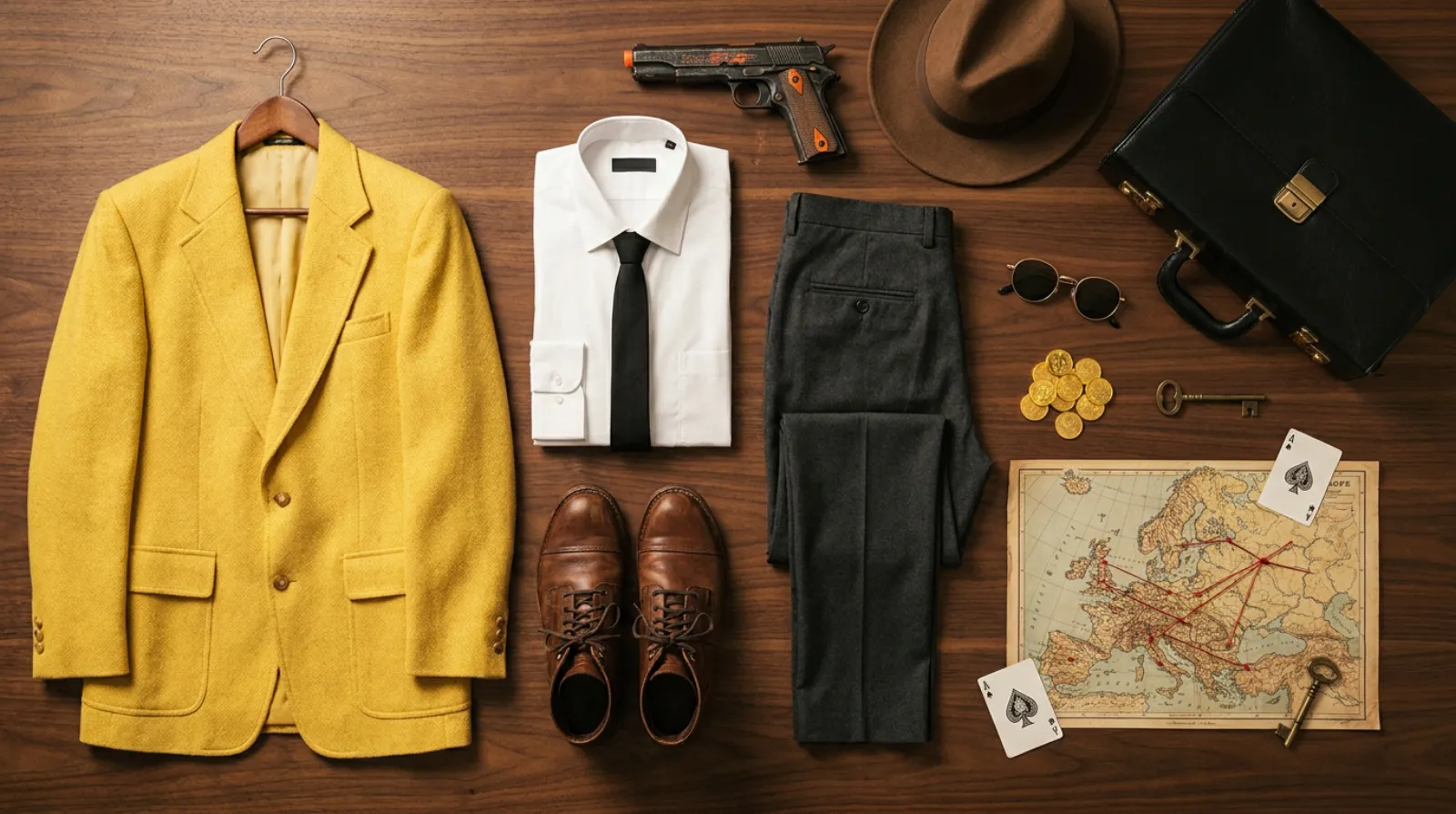
The opening of the original 1971 Lupin III anime drops a yellow Mercedes-Benz SSK from the Monkey Punch manga into a real Tokyo street, paints the sky an impossible cyan, and lets a jazz trumpet line by Yuji Ohno announce that the next forty-five minutes are going to be a heist, a chase, a near-miss escape, and one perfectly-timed wink at the camera. Arsene Lupin III is the grandson of the original gentleman thief from Maurice Leblanc’s French detective novels, and from the moment Kazuhiko Kato (working under the pen name Monkey Punch) started running the manga in Weekly Manga Action in 1967, the franchise has been the answer to a very specific question. What if a heist story did not pretend to take itself seriously, leaned all the way into the cartoon physics, kept the jazz, and gave the protagonist a yellow jacket that should not work on anybody but somehow works on him? The answer is fifty-plus years of anime, films, OVAs, TV specials, and one of the most enduring international franchises in animation. Walking the Lupin the 3rd shirt lineup on AnimeBape feels like packing a small carry-on for a Riviera heist you have not actually committed to yet.
Who Lupin the 3rd is, and why the Monkey Punch crew still hits
Lupin III (Rupan Sansei in romaji, the Roman numeral indicating the third generation of the Lupin line) is the action-comedy heist franchise originally created by the manga artist Kazuhiko Kato under the pen name Monkey Punch, serialized in Weekly Manga Action from 1967 to 1969 with multiple manga revivals across the following decades, and adapted into the long-running anime franchise that started with the original 1971 to 1972 first series produced by TMS Entertainment and has continued essentially without interruption since. The lineup includes the second series (1977 to 1980, the red-jacket era and the most-watched single run), the third series (1984 to 1985, the pink-jacket era), the modern Part 4 The Italian Adventure (2015, the blue-jacket Italian-arc revival), Part 5 (2018, the modern-tech French-arc Goemon-versus-Yata storyline), Part 6 (2021, the fiftieth-anniversary mystery-genre arc), and the broader catalog of theatrical films including Hayao Miyazaki’s 1979 Lupin III The Castle of Cagliostro (Miyazaki’s directorial debut and arguably the most beloved single Lupin film), the 1978 The Mystery of Mamo, the 1985 Legend of the Gold of Babylon, the 1995 Dead or Alive (Monkey Punch’s own directorial entry), the 2014 live-action film, the 2019 The First (the first full CGI Lupin film), and the cluster of annual TV specials that have run roughly once per year since the late 1980s. The series page on MyAnimeList for Lupin III covers the broader series chronology and the season-by-season breakdown in detail.
The Lupin gang is the actual draw across the entire franchise and the reason the series stays watchable across the generations. Arsene Lupin III is the main draw (a master thief whose calling card is a literal calling card left at the scene, who steals less out of greed than out of the pure sporting challenge, and whose yellow jacket and red necktie color combination should not work but absolutely does). Daisuke Jigen is the right-hand sharpshooter (a fedora-and-black-suit gunslinger who can hit a moving target through a wineglass from three blocks out with his Smith and Wesson Model 19 Combat Magnum, whose deadpan is the deadpan that all subsequent anime gunslingers are measured against). Goemon Ishikawa XIII is the swordsman (the thirteenth-generation descendant of the historical Edo-era thief Ishikawa Goemon, who cuts through tank armor with his Zantetsuken katana, whose catchphrase “Mata tsumaranu mono wo kitte shimatta” closes every fight). Fujiko Mine is the femme fatale (a master thief in her own right whose relationship with Lupin runs every register from genuine partner to rival to enemy depending on the heist). And Inspector Koichi Zenigata of the ICPO is the cop (a relentless, undignified, undefeatable rival who chases Lupin across every continent and never quite catches him, whose name “Tottsan” is the affectionate nickname Lupin himself calls him).
The signature line that closes every Goemon swordfight scene across the entire run is the quote that captures the whole franchise tone: “Mata tsumaranu mono wo kitte shimatta,” which translates roughly to “Once again I have cut a worthless object.” Goemon delivers it after slicing through whatever absurd thing he just sliced (a tank, a helicopter, a metal door, a giant statue) with absolute deadpan, and it lands because the line is the perfect summary of the show’s relationship to its own action. The series treats spectacular swordfighting and impossible heists as a kind of background hum, the characters never quite get impressed with their own competence, and that genre-savvy nonchalance is exactly what makes the Lupin tone the Lupin tone. The line is a real Goemon catchphrase from the original Monkey Punch manga and the 1977 second-series anime, not a fan invention.
Before going further, a quick context note for the broader audience. Lupin III sits in the comedy-action register with an adult-skewing seinen-leaning lean rather than the kid-friendly shonen register. The series carries cartoon-violence (gunfights, swordfights, chase sequences, comedic property destruction) that reads as cartoon-physics rather than as graphic on-screen brutality, mild sexual content (Fujiko Mine’s character is often drawn in deliberately provocative-1970s-pinup style and the franchise leans into the spy-fi-femme-fatale tropes across the older entries), strong-ish language in some of the older dub releases, and broader adult-themed content around heist-and-crime story register. The modern entries dial back some of the older entries’ rougher edges, but the franchise reads as a teen-and-adult-fan property rather than as a kid-anime, and the broader recommendation lane runs the older-teen-and-adult-fan demographic.
The Lupin the 3rd merch lineup on AnimeBape, walked piece by piece
The Lupin III collection on AnimeBape currently sits in a focused holiday-and-statement-knitwear lane that pulls the franchise iconography into the cold-weather ugly-Christmas-sweater register, which is unexpectedly on-brand for a franchise whose annual TV specials have been a Japanese holiday-season tradition for almost four decades. I want to walk both pieces honestly so a Lupin fan can pick the right pickup for the right wardrobe lane and the right holiday occasion.
The Lupin the 3rd Run Run Rudolph Ugly Christmas Sweater is the comedy-statement holiday pickup in the collection and the right anchor for the Lupin fan who wants the full ugly-sweater holiday-party register. The sweater runs a standard crewneck ugly-Christmas-sweater cut with an all-over print that pulls the Lupin gang chase-and-escape iconography into the holiday-themed register (the running-Rudolph reference plays directly into the chase-sequence frame the entire franchise is built on, Lupin and the crew running from Zenigata across Christmas-coded snowy backgrounds with the deer-and-sleigh imagery layered in). The polyester-blend ugly-sweater construction is the standard cold-weather knitwear-equivalent that handles the actual holiday-party rotation, and the all-over print runs visually loud in exactly the way the ugly-Christmas-sweater register expects. For the Lupin fan whose December rotation runs through actual ugly-sweater holiday parties and who wants a piece that signals proper deep-cut series engagement at the office Christmas party, the Run Run Rudolph pickup is the smart move. The all-over print specifically lands as proper considered niche-fandom ugly-sweater styling rather than as the standard reindeer-and-snowflake template.
The Lupin the 3rd Happy Trip Ugly Christmas Sweater is the alternate holiday pickup that runs a different Lupin-coded iconography pass across the same ugly-sweater silhouette. The sweater runs the same standard crewneck ugly-Christmas-sweater cut with a different all-over print that pulls the Lupin gang travel-and-heist iconography into the holiday-themed register (the “happy trip” framing reads as the gang’s perpetual jet-set escape-across-Europe arc, with the suitcases, the vintage cars, the Lupin-yellow-jacket color anchor, and the cross-continent travel motif rendered in the holiday-sweater color palette). The polyester-blend construction matches the other piece exactly, and the styling lane runs identically. For the Lupin fan who wants the travel-and-jet-set Lupin coding rather than the chase-and-Zenigata coding, this is the natural alternate pickup. The two sweaters are deliberately built as alternates rather than as a layered set, so the choice between them comes down to which Lupin-coding angle you want to lead with at the holiday party.
Together the two pieces give you a focused holiday-statement knitwear rotation that reads as proper Lupin fandom engagement without ever depicting a literal Lupin or Jigen portrait, which is the smarter merch choice because the Lupin character design is heavily copyrighted by the Monkey Punch estate and TMS Entertainment and any literal character depiction would land in IP-difficult territory. The all-over-print holiday-sweater approach uses the broader Lupin gang iconography (the chase, the heist, the travel, the Christmas-coded snowy backgrounds, the running-and-escaping motion) to signal the franchise to anyone who knows it without crossing into literal character likeness. The deep red, green, navy, and Lupin-yellow color palette across both sweaters pairs naturally with dark denim, black trousers, brown leather boots, and the standard cold-weather adult wardrobe basics.
How to choose your Lupin the 3rd piece, by audience
I think about the Lupin lineup in three lanes because the holiday-sweater format puts the pickups squarely in the ugly-Christmas-sweater-party rotation and the right pickup changes a lot depending on how the fan engages with the franchise and how their December actually looks.
If you are buying for yourself, the choice comes down to which Lupin coding hits you harder. For the chase-and-Zenigata-coded fan whose favorite Lupin scenes are the rooftop-Tokyo chase sequences and the running-from-Inspector-Tottsan absurdity, the Run Run Rudolph sweater is the natural pickup that pulls the chase iconography into the holiday register. For the heist-and-travel-coded fan whose favorite Lupin scenes are the Riviera Casino heist, the Paris jewelry-store break-in, the Castle of Cagliostro arc, and the broader jet-set-across-Europe travel motif, the Happy Trip sweater is the natural pickup that pulls the travel iconography into the holiday register. Honestly, owning both gives you a holiday-rotation knitwear pair that lets you run different Lupin-coding angles across different holiday-party occasions without repeating the same piece.
If you are gift-giving for a Lupin fan, the holiday-sweater format is genuinely a perfect gift lane because the ugly-Christmas-sweater niche-fandom move hits hardest exactly when other gift options struggle (you can give an ugly-sweater gift in early December and the recipient gets months of December-party use across the rotation that year and every subsequent year). For the deep-cut-Lupin-fan recipient, either sweater works; the choice comes down to whether the recipient leans more toward the chase coding or the travel coding. For the gift-buyer who is not sure which way the recipient leans, the Run Run Rudolph sweater is probably the safer default because the chase iconography is the more universally recognized Lupin-franchise visual anchor. The pair-as-gift move runs as the deep-fandom-statement gift for the proper Lupin obsessive.
If you are buying for a kid who watches Lupin, the franchise sits more in the older-teen-and-adult-fan register than in the kid-anime register because of the seinen-leaning content (the cartoon-violence, the mild sexual content in some of the older entries, the broader adult-heist-comedy tone), but the holiday-sweater format itself is genuinely age-neutral and the older-teen Lupin fan whose engagement runs through the 2015 Italian Adventure series, the Castle of Cagliostro film, or the Part 5 modern entries will happily wear either sweater to a holiday party. Size-wise, the ugly-sweater format generally runs the broader adult-cut register, so check the sizing chart carefully for the younger-teen recipient.
Styling, pairings, and the wider Monkey Punch register
The Lupin holiday sweaters pair across the adult cold-weather wardrobe in the deep red, green, navy, and Lupin-yellow color register. The Run Run Rudolph sweater over a plain white cotton tee with dark denim and brown leather boots gives the standard casual ugly-sweater holiday-party build that reads as proper considered fandom styling. The Happy Trip sweater with black slim-cut trousers, a black leather belt, and chukka boots pushes the look into the slightly-elevated holiday-office-party register that lets the all-over print do the talking against neutral basics. Both sweaters pair naturally with a wool overcoat, a tweed blazer, a denim jacket, or a leather bomber as the outer layer for the cold-weather commute-to-party rotation. The Lupin-yellow accent color across both pieces works as the unexpected color anchor that makes the broader build feel intentional rather than as generic licensed-anime merch.
For Lupin III fandom culture more broadly, the franchise sits at the foundational tier of the action-comedy heist anime canon alongside Cowboy Bebop (Shinichiro Watanabe’s clear Lupin-influenced 1998 series), City Hunter (the Tsukasa Hojo bounty-hunter action-comedy that ran the same Lupin-tone register through the late-1980s), Black Lagoon (the modern Rei Hiroe seinen-action update on the same gun-and-bounty register), and the broader Japanese action-comedy catalog that owes Monkey Punch a structural debt. The fan conversation around the series runs on the favorite-jacket-color debate (the original 1971 green-jacket era, the 1977 red-jacket era which is the most-watched single run, the 1984 pink-jacket era, the 2015 blue-jacket Italian-arc revival), on the Castle of Cagliostro-versus-Mamo theatrical-film debate (the 1979 Miyazaki film versus the 1978 Soji Yoshikawa film, which are the two cornerstone Lupin theatrical entries), on the Lupin-versus-Jigen-versus-Goemon ranking question, on the annual-TV-special tradition that has run since the late 1980s, on the international localization history (the original 1980 Italian Lupin localization that turned the franchise into an Italian institution, the 1988 Streamline Pictures English Castle of Cagliostro dub, the modern Discotek Media Blu-ray remasters), and on the 2014 live-action film and the 2019 The First CGI film as the two most recent live-action and CGI experiments. The 2022 death of original creator Monkey Punch (Kazuhiko Kato) also reshaped the broader fan conversation around the franchise’s continued production cadence under TMS Entertainment.
If you want to extend the build, the broader Lupin the 3rd collection on AnimeBape is the natural home base for the franchise, holding the lineup together as additional pieces get added across the seasonal rotation. The pieces in this collection currently focus on the holiday-statement-knitwear lane rather than running across home decor or accessories, so the build pairs naturally with the standard adult cold-weather wardrobe of dark denim, black trousers, brown leather boots, and the standard wool-overcoat-and-blazer outer-layer rotation from elsewhere in your closet rather than requiring matched accessory pickups from the same collection. For broader wandering across other vintage-comedy-action anime collections, browse the broader character A-Z archive to find related classic-anime-fan pickups.
For care across the lineup, the rules stay simple. Both ugly-Christmas-sweaters handle standard polyester-blend machine washing inside out on cold with hang-dry recommended to preserve the all-over print detail and the construction longevity across multiple December holiday-party seasons. The polyester-blend construction specifically benefits from inside-out washing to preserve the all-over print across multiple wash cycles, and avoiding high-heat tumble drying preserves the seam construction and the fit across multiple years of wear. None of the pieces require specialty handling beyond standard polyester-blend ugly-sweater care, and both should last across multiple holiday seasons with proper handling, which matters because the Lupin holiday-sweater build is positioned as a multi-year December-rotation pickup rather than as a single-party impulse buy. The deep red, green, navy, and Lupin-yellow color palette holds across multiple wash cycles and seasons of wear and reads as fresh every December.
Shopping for the whole crew? See every design in the AnimeBape Christmas sweater collection and match a sweater to each fan on your list.
FAQ
What is the best Lupin the 3rd shirt to start with?
For most Lupin fans, the Lupin the 3rd Run Run Rudolph Ugly Christmas Sweater is the strongest entry pickup because the chase-and-Zenigata iconography is the most universally recognized Lupin-franchise visual anchor and the ugly-sweater format hits hardest exactly when the December holiday-party rotation rolls around. The Happy Trip alternate is the natural matching pickup for the heist-and-travel-coded Lupin fan, and the pair-as-set works as the proper deep-fandom statement build.
Are Lupin the 3rd sweaters good gifts for anime fans?
Yes, particularly for the older-teen and adult Lupin fan whose December rotation runs through actual ugly-Christmas-sweater holiday parties. The niche-fandom ugly-sweater move lands as a genuinely thoughtful gift for the recipient who watches the annual Lupin TV specials, the Castle of Cagliostro Miyazaki film, or the Part 5 modern entries because the gift signals proper deep-cut series engagement rather than as a generic licensed-anime tee. Match the chase-coding versus travel-coding angle to the recipient’s favorite Lupin entries for the strongest gift hit.
How should a Lupin ugly sweater fit?
The ugly-Christmas-sweater format generally runs the broader adult-cut register, so the standard true-to-size sizing applies for most adult buyers. Order your normal sweater size for the standard fit, or size up one if you prefer a looser drape that layers easily over a thermal long-sleeve or a button-up for the colder weather. Check the specific sizing chart for the younger-teen recipient because the ugly-sweater cut generally does not run down into the kids’ sizes.
Is Lupin the 3rd merch okay for kids?
Lupin III sits more in the older-teen-and-adult-fan register than in the kid-anime register because of the seinen-leaning source content (cartoon violence, mild sexual content in some of the older entries, broader adult-heist-comedy tone). The ugly-sweater format itself is age-neutral, but the broader recommendation lane runs the older-teen-and-adult demographic. For a younger kid who has seen the Castle of Cagliostro Miyazaki film, the sweater works as a sweet niche-fandom gift, but the broader franchise content puts the merch in the older-teen and adult-fan lane primarily.
That covers the lineup. Lupin the 3rd is one of the foundational action-comedy heist anime franchises of the last fifty years, and the holiday-sweater format translates the broader Lupin gang iconography into a cold-weather statement piece that actually works in the real December holiday-party rotation rather than reading as loud generic licensed-anime merch. Pick the Run Run Rudolph sweater for the chase-and-Zenigata-coded build, the Happy Trip sweater for the heist-and-travel-coded build, or the matched pair for the proper deep-fandom statement rotation. For the full archive that holds the Lupin the 3rd lineup together as additional pieces get added, the Lupin the 3rd collection on AnimeBape is the home base. The yellow jacket still works, the Zantetsuken still cuts, and the Monkey Punch gang still gets away clean every time. Mata tsumaranu mono wo kitte shimatta, as Goemon would say, once again I have cut a worthless object.
