Enjoy Free Shipping on Orders Over $99! US Only

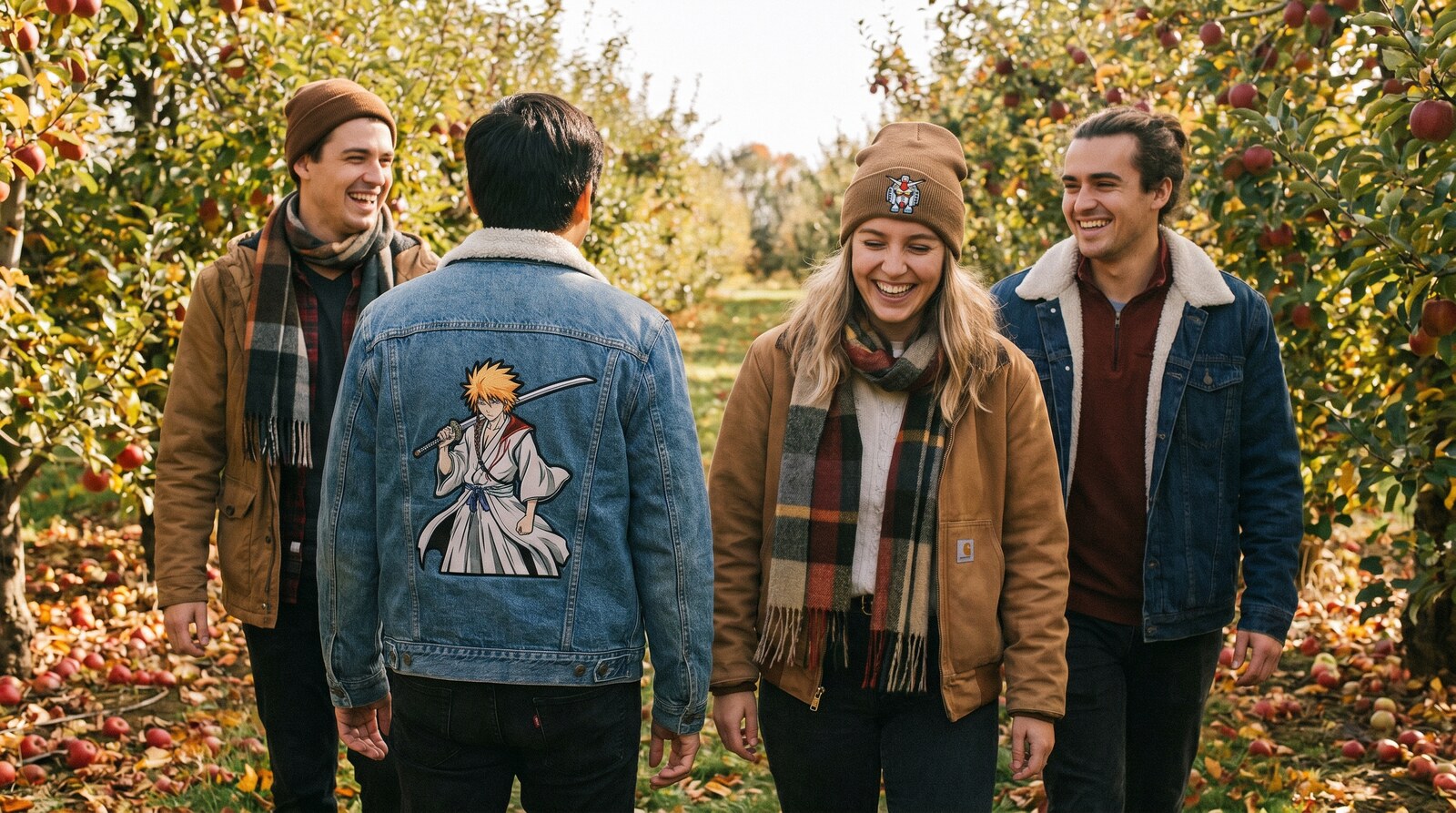
Layering 101 is the part everyone already knows: put a jacket over a hoodie when it gets cold. This is the other part, the one that decides whether the result looks deliberate or just accumulated. Anime fall layering has a specific problem that regular menswear advice never addresses, which is that our middle layer usually has a large graphic on it, and every layer you add covers part of that graphic. Get the order wrong and you end up wearing a jacket over a print nobody can see, which is the whole reason you bought the piece.
So this is the version of layering that accounts for the print. Three rules, then the combinations that actually work, then the mistakes I made for about two years before somebody pointed them out.
Rule one: decide which layer is the star before you get dressed
Every outfit gets one loud element. In anime layering that is almost always a print, and the entire structure of the outfit should be built around keeping that print visible and letting everything else recede.
If the graphic lives on the base layer, the pieces over it must open down the front. A zip hoodie, an unbuttoned flannel, a denim jacket left open. Anything that closes fully turns the base layer into an undershirt.
If the graphic lives on the mid layer, which is the most common case with anime sweatshirts and hoodies, then the outer layer needs to be either open or short enough not to swallow it. This is where a lot of otherwise good outfits fall apart, because a long coat over a sweatshirt hides the entire print.
If the graphic lives on the outer layer, like a printed varsity jacket, then everything underneath goes plain. No exceptions. Two graphics stacked never resolves, no matter how well they match in theory.
Rule two: weight goes up as you go out
This sounds obvious and almost nobody follows it. Each layer should be heavier than the one under it. A thin tee, then a mid weight sweatshirt, then a structured jacket. When you invert that, putting a heavy knit under a thin shell, the outfit bunches at the shoulders and the shell stops sitting properly.
Practically this means the lightweight hoodie range is more useful in fall than a heavy one, because a lightweight hoodie can be a mid layer under a jacket, while a thick one can only be an outer layer. One piece that plays two roles beats one piece that plays one.
The exception is the oversized blanket hoodie. Those are terminal layers. Nothing goes over them and nothing needs to.
Rule three: collars and cuffs are where layering shows
The tell that separates a layered outfit from a pile of clothes is what happens at the edges. You want to see distinct layers at the neck and the wrist, in that order.
A hood sitting outside a jacket collar reads as intentional. A hood crushed under a jacket collar reads as an accident. Same with sleeves: let the base layer show a half inch at the cuff, or push the outer sleeves up and let the mid layer show properly. Either is fine. What does not work is three sleeves ending at exactly the same point, which just looks bulky.
The combinations that actually work
Tee under an open zip hoodie
The lightest real layering there is, and the one that covers the widest temperature range. A zip hoodie jacket left open over a graphic tee gives you a visible print, a temperature adjustment you can make without taking anything off, and a vertical line down the middle that makes the whole outfit look longer.
Graphic sweatshirt under a denim or chore jacket
The workhorse. A vintage wash sweatshirt with a denim jacket over the top hits the weight progression correctly and keeps most of the print visible. If your jacket is cropped, even better, because the sweatshirt hem showing below the jacket adds a second visible layer at the bottom.
Plain base, plain mid, loud outer
The inverted version, and the one that photographs best. Plain tee, plain hoodie or crewneck, then a printed outer piece carrying everything. This is the structure to use when the piece you love is a jacket rather than a sweatshirt.
Hoodie under a windbreaker
The wet weather answer. A windbreaker jacket over a hoodie handles rain that knit alone cannot, and it packs into a bag once the weather turns. Windbreakers are the most underrated outer layer in anime apparel precisely because they solve a real problem rather than just adding warmth.
Color, which matters more than people think
Anime prints tend to be high saturation. That is the point of them. It also means the surrounding layers have to be quiet or the whole thing turns into noise.
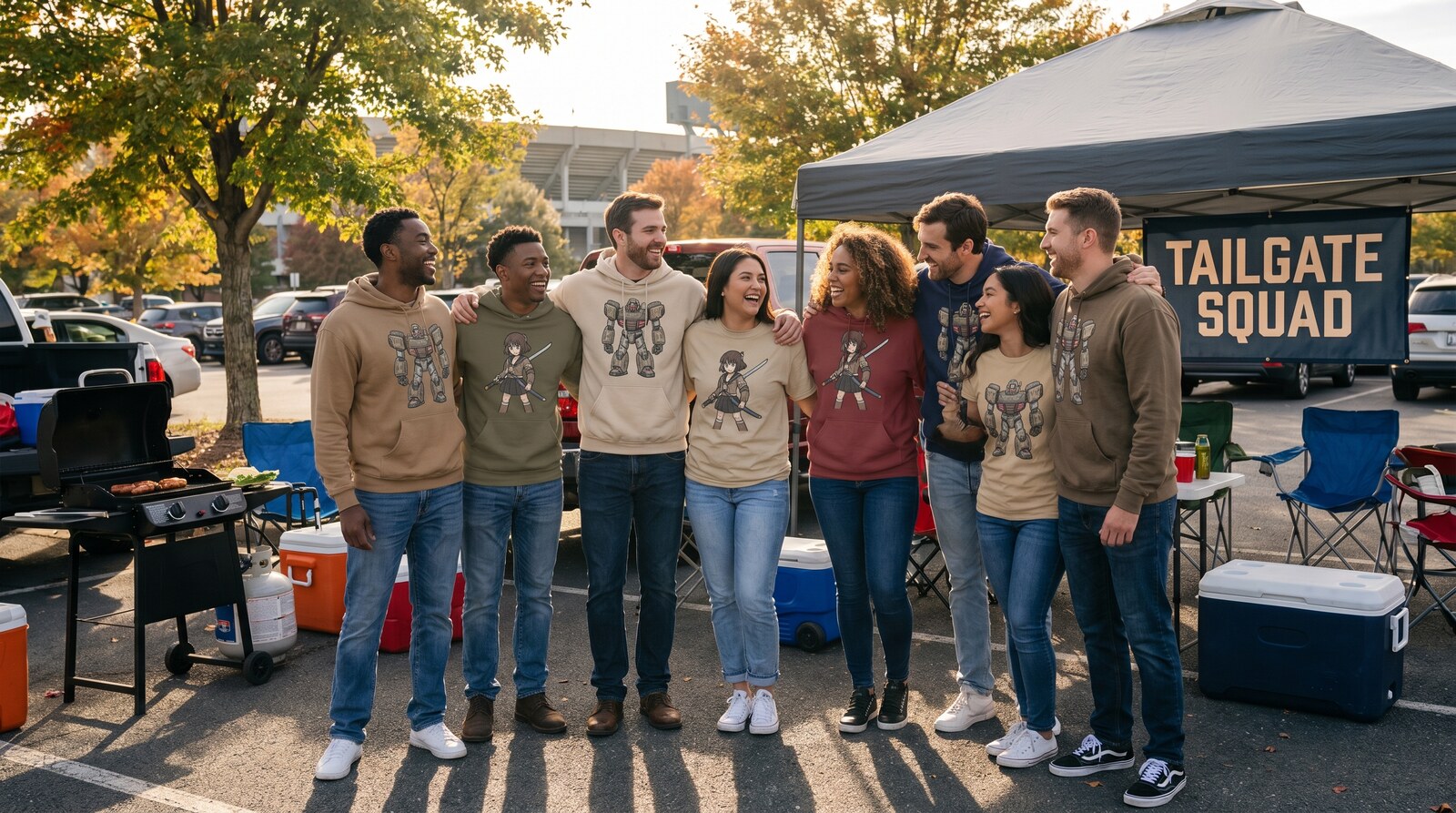
The reliable approach is to pick one color from inside the print and echo it somewhere else in the outfit, then keep everything else neutral. If the sweatshirt has an orange accent, an orange beanie works. A second orange garment does not, because now the two compete rather than echo.
Fall specifically rewards earth tones as the neutral. Olive, rust, cream and washed indigo make a graphic read as seasonal, where black makes it read as generic. Black is not wrong, it is just the option that adds nothing.
Three audiences, three different priorities
If you are building this for yourself, buy the lightweight middle layers first. Most people already own outerwear and already own tees. The gap in almost every wardrobe is the mid layer that is thin enough to go under something.
If you are buying for someone else, layering pieces are the safest gift category in anime apparel, because a mid layer is forgiving about fit in a way that a fitted shirt is not. A streetwear hoodie in their usual size will work. Avoid outerwear as a gift unless you know their sizing well, since jackets are where fit becomes unforgiving.
If you are buying for a kid, the priority is the zip front, full stop. Children go from cold to overheated in about fifteen minutes and a zip is the only closure that keeps up without an adult ending up carrying a discarded sweater. The kids hoodie range is proportioned properly rather than being a scaled down adult cut, which matters for how the layers sit.
Mistakes worth avoiding
Going full winter in September. A heavy puffer over a sweatshirt in 65 degree weather looks forced and you will be carrying it by noon. Stay lighter longer than feels natural.
Stacking two prints. It never works. I have tried to make it work and it has never once worked.
Ignoring the bottom half. Layering is a top half discipline, which means the bottoms have to be simple or the whole balance tips. Plain dark denim, plain chinos, plain sweatpants. Save the printed bottoms for days when the top half is plain.
Forgetting that layers add bulk. If you normally wear a fitted tee and you are now putting two things over it, the outer piece needs room. This is the one place where sizing up is correct rather than lazy.
A note on proportion
The last thing that separates a layered outfit that works from one that almost does is proportion, and it is the part almost nobody talks about. Layers add visual weight to the top half of the body. If the bottom half stays the same, the whole silhouette becomes top heavy and slightly squat, which is why some people feel like layering just does not suit them.
Two fixes, both free. Cuff the jeans once so a little ankle shows, which lengthens the leg line. And let one layer be longer than the one over it, so there is a visible step at the hem rather than everything ending at the same point. A sweatshirt hem showing an inch below a cropped jacket does more for a silhouette than any individual garment choice.
Care notes for layered pieces
Wash inside out and cold, skip the softener, and keep printed and stitched pieces out of a hot dryer. Heat is what cracks graphics and puckers embroidery, and it is the single biggest factor in how long a layering piece keeps looking right.
Store knit layers folded rather than hung. A season on a hanger stretches the shoulders, and shoulder distortion is what makes a sweatshirt look old long before the graphic fades.
Layering for specific situations
General rules only get you so far. These are the four scenarios that come up most, and what actually works in each.
The commute where the building is overheated. This is the hardest one, because you are dressing for two climates. The answer is a full zip mid layer and nothing heavier, so the layer you remove indoors is the one carrying the warmth rather than the one carrying the print. Pullover hoodies fail here, because taking one off means untucking and re-fixing everything underneath.
The all day outdoor thing. Pumpkin patch, football game, walking around a town you do not live in. Prioritize the outer layer being windproof over it being warm. Wind is what makes 55 degrees feel like 40, and a thin windbreaker over a mid weight knit outperforms a thick coat with an open weave every time.
The convention. Different rules entirely, because indoor convention halls run hot and crowded. Layer light and plan to carry something, and put the piece you actually want photographed on the outside rather than buried. This is the one context where matching multiple pieces from the same series reads as commitment rather than as a costume.
The evening that starts warm and ends cold. Dinner then walking somewhere. A jacket you can tie at the waist beats one you have to carry, which quietly rules out anything bulky. This is where the lightweight pieces earn their keep, since a packable layer is the difference between having it with you and having left it at home.
Building the layering wardrobe in order
If you are starting from close to nothing, buy in this sequence and you will not waste money.
First, a lightweight zip hoodie in a neutral color. It is the highest utility item in fall because it plays two roles. Second, one graphic mid layer you actually love, since that is the piece the outfits get built around. Third, a denim or chore jacket, which does not need to be anime at all and in fact works better if it is not. Fourth, and only if your autumn is genuinely wet, a windbreaker.
That is four pieces and it produces most of the combinations in this guide, because the connective tissue is plain tees and plain bottoms that most people already own. The failure mode I see constantly is buying four graphic pieces and zero neutral ones, which leaves you with four outfits that all fight themselves.
Frequently asked questions
How many layers is too many for fall?
Three is the practical ceiling for most autumn weather: base, mid, outer. A fourth adds bulk without adding much warmth and it buries whatever print you were trying to show.
Should I size up for layering?
Size up on the outer layer only. Base and mid layers should fit normally, since extra room underneath just bunches. Most anime hoodies and sweatshirts are already cut relaxed, so your usual size is usually right.
How do I keep a graphic visible under a jacket?
Wear the jacket open, or choose a cropped outer layer that ends above the graphic. A full zip mid layer also works, since you control how much of the base layer shows.
What is the most versatile layering piece to buy first?
A lightweight zip hoodie. It works as an outer layer in mild weather and a mid layer in cold weather, which is two roles from one purchase, and the zip lets you adjust without taking anything off.
One closing tip
Test a new combination at home before you commit to it for a day out. Five minutes in front of a mirror catches the proportion problems that are otherwise discovered two hours into a day when it is too late to fix. Most of the time the fix is small: push the sleeves up, open the jacket, swap the shoes. Those small adjustments are most of the distance between an outfit that works and one that almost does.
