Enjoy Free Shipping on Orders Over $99! US Only

Before I owned a single Pain shirt, the Pain arc landed for me the first time I was nineteen, watching the Deva Path stand over a flattened Hidden Leaf and ask the most uncomfortable question in the whole series out loud: does anyone deserve peace if peace is only ever bought with someone else’s suffering. He is not a snarling villain twirling a mustache. He is a soft-spoken man with ringed purple eyes who genuinely believes he is the only adult in the room, and the show makes you sit in that discomfort for a long time. That is the moment I started seeing Pain less as a boss fight and more as an argument, and the reason a good Pain shirt sits in my closet today. So when I went hunting for the right one, I was not after a random Akatsuki graphic. I wanted something that carried that specific weight, the calm-before-the-storm stillness of a god who decided the world needed a lesson. I have bought, returned, and re-bought enough of this gear to know what actually captures him, and that is what this guide is about.
Who Pain is, and why he hits so hard
Pain is the public face of the Akatsuki and, for most of Shippuden, its supposed leader. The twist that rewires your brain on rewatch is that “Pain” is not one person at all. He is Nagato, a war orphan from the Hidden Rain, channeling his power through six reanimated bodies known as the Six Paths, each with a different role and a different Rinnegan-fueled ability. The body you see most, the orange-haired Deva Path, is built from his late friend Yahiko. That detail alone reframes every scene. The man preaching about pain is literally speaking through the corpse of the friend whose death taught it to him.
His philosophy is the part that sticks. Nagato grew up watching the larger nations use his small country as a battlefield, and he concluded that the only thing humans truly understand is suffering. His plan is to build a weapon so terrible that the fear of it forces the world into a fragile, terrified calm. The line that defines him, and the one I think about most, is “Shinku wo ajiwau ga ii,” which translates roughly to “Know pain.” It is not a taunt. In his logic it is almost a teaching, the idea that only through shared suffering can people finally understand each other. Heavy stuff for a shonen antagonist, and it is exactly why he endures as a fan favorite. If you want the full character and arc context, the Naruto Shippuden page on MyAnimeList lays out where his story sits in the timeline.
What separates Pain from the rest of the Akatsuki roster is the stillness. Most of the organization runs on swagger, on Hidan’s mouth or Deidara’s ego or Kisame’s grin. Pain barely raises his voice. He floats into the Leaf, asks where Naruto is, and when he does not get an answer he reshapes the entire village with two words. That contrast, total power delivered with total calm, is what makes him such a clean design subject. You are not wearing a loud screaming villain. You are wearing the quiet one, the one who already decided how this ends. I have written before about how the broader Naruto Shippuden world earns its gray morality, and Pain might be the single best example of it. He is the villain who is, frustratingly, not entirely wrong.
The Pain merch lineup on AnimeBape
Here is what I love about shopping for this specific character. A good Pain shirt does not need a busy collage. The Rinnegan alone, those concentric purple rings, is one of the most striking single symbols in all of anime, so the best pieces lean on restraint. The Pain collection on AnimeBape covers tees, outerwear, decor, and the small stuff, and I will walk the pieces I keep coming back to.
The graphic tee as the everyday entry point
If you are starting from zero, the Pain Universal Destruction vintage tee (around $35) is the one I point people to first. The vintage wash is the detail that sells it. Instead of a glossy fresh-off-the-press print, it has that faded, lived-in look, which suits Pain perfectly because his whole vibe is weathered and worn down by war. It reads as a vintage band tee from across a room, and only fellow fans clock the Universal Destruction nod up close. That subtlety is the entire appeal. You can wear it to a coffee shop without announcing your entire watch history.
Outerwear with real presence
For colder days the Pain Rinnegan embroidered hoodie (around $59) is the centerpiece of any Pain rotation. Embroidery is the upgrade that matters here. A printed Rinnegan can crack and fade, but stitched rings catch the light and hold up wash after wash. It feels like a real garment first and a fan piece second, which is exactly the energy Pain deserves. This is the piece I reach for when I want the design to do the talking without shouting.
The cap for low-commitment fandom
The Mighty Push embroidered baseball cap (around $43) is the sleeper pick. A cap is the lowest-commitment way to rep a character, and the Almighty Push reference (Pain’s signature repelling technique) is a deep cut that other fans love spotting. I wear mine with plain fits constantly, and it is the piece that has sparked the most “wait, is that Pain” conversations.
Decor and the little stuff
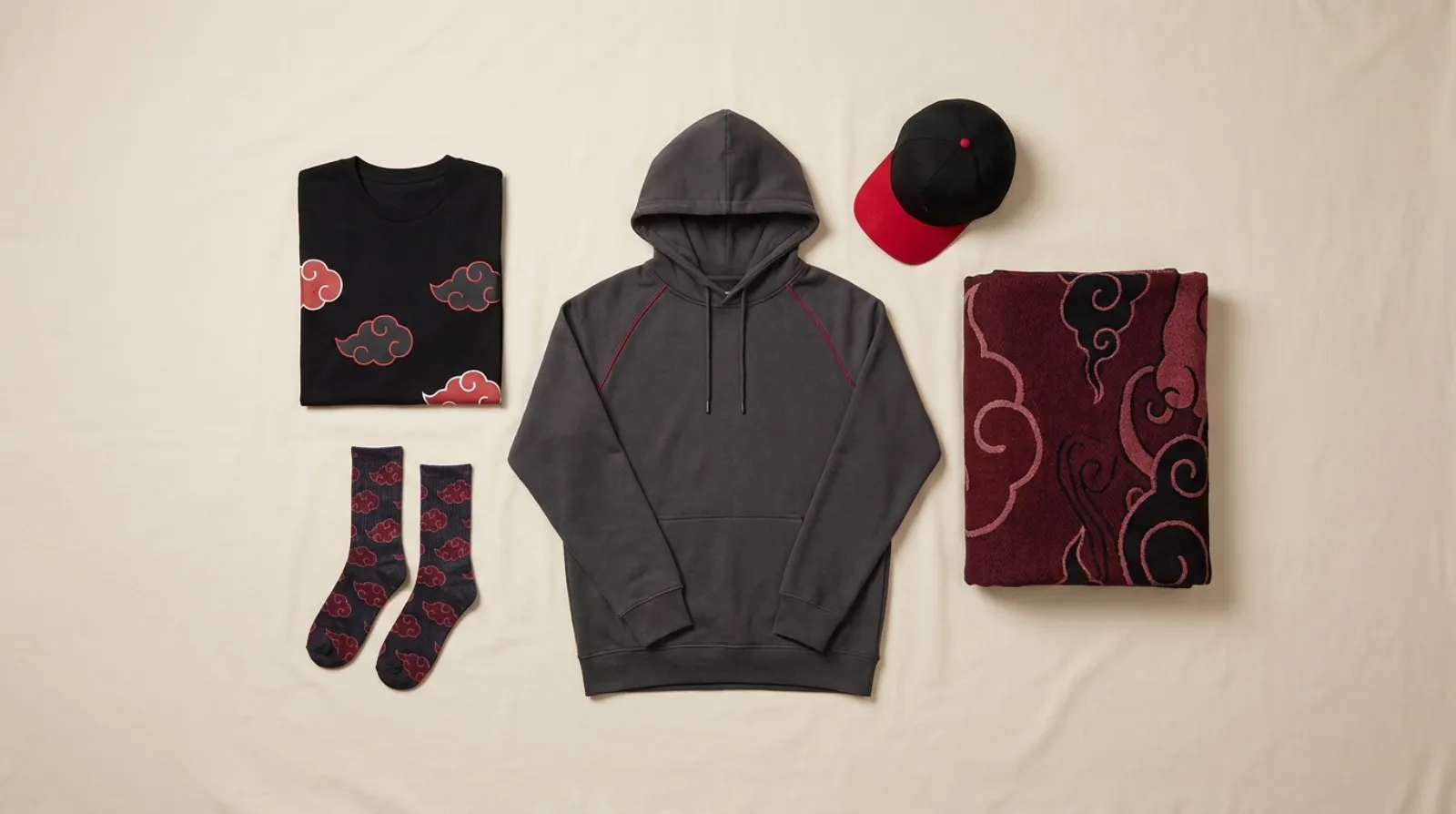
If you want to bring the Akatsuki energy into a room rather than an outfit, the Akatsuki Astral Pain tapestry (around $25) is a genuinely good wall piece, and the matching Astral Pain bedding set (around $64) turns a whole room into a shrine for the committed fan. On the smaller end, the Akatsuki Pain costume socks (around $20) are a cheap, fun way to sneak a little fandom into an otherwise normal outfit, and they make a great stocking-stuffer for the Naruto fan in your life.
How to choose the right Pain piece
The best pick really comes down to who is buying and why. Here is the breakdown I give friends in real life, hitting the three angles I always think about.

If you are buying for yourself
Think about your daily-driver energy. If you want something you will actually reach for on a normal day, the vintage tee or the cap are the no-brainers because they fly under the radar and pair with anything. The embroidered hoodie is your statement layer for when you want the Rinnegan front and center. Personally, the vintage tee is the one I wear most, because it never feels like a costume, it just feels like a good tee that happens to be Pain.
If you are buying a gift
If you are shopping for the friend who still defends Nagato in every group chat, specificity is everything. A generic Akatsuki shirt is fine, but a Pain piece tells them you know which character actually wrecked them. The embroidered hoodie is the big-swing gift, the tapestry is the perfect dorm-room surprise, and the socks are the low-stakes add-on that always gets a laugh. Match the piece to how deep they are in the lore and you cannot miss.
If you are a parent buying for a kid
A lot of younger fans go through a serious Akatsuki phase, and Pain is usually the favorite because the Six Paths concept is genuinely cool to a kid. Two practical notes. Anime apparel runs a touch large and boxy, so for a slim kid I would size down one from their usual. And while Pain is a villain, the designs themselves (the Rinnegan, the cloud pattern) are symbolic rather than gory, so they read as stylish more than scary. The socks and the cap are the easiest, most kid-friendly entry points.
Pairings, conventions, and care
Styling Pain gear is easy because the palette does the work. The Akatsuki world is black, red, and that signature Rinnegan purple, which all play beautifully with plain denim and black bottoms. I treat the Pain piece as the single statement and keep everything else neutral, so the design never has to compete. The vintage tee under an open shirt or jacket is my go-to layered look, and the embroidered hoodie carries an outfit on its own.
For conventions, Pain is a quietly elite cosplay-adjacent choice. You do not need a full costume to be recognized. Wear the Rinnegan hoodie and the right fans will nod from across the hall. If you want to round out the look, this gear pairs naturally with the rest of the Shippuden lineup, and a piece repping a hero-side character like Naruto Uzumaki himself makes for a fun hero-versus-villain duo if you and a friend want to coordinate.
On care, the rules are simple and they matter. Wash everything cold and inside out, and hang the embroidered and printed pieces to dry rather than tumbling them. That single habit is the biggest thing keeping a design crisp for years instead of months. The whole point is to preserve that shibui, that understated, weathered cool, which is the exact aesthetic Pain embodies. Worn-in is good, faded-and-cracked is not, and a little care keeps you on the right side of that line.
If you want to build a small rotation instead of one piece, here is the approach I use. Start with the vintage tee as your neutral daily driver, the one you grab without thinking. Add the embroidered hoodie as your cold-weather statement layer for events and photos. Then grab the cap as your everyday low-effort fandom flex, the thing you throw on for a coffee run. Three pieces, three jobs, and you are never stuck choosing between comfort and looking like you care. There is something fitting about building a Pain wardrobe in layers anyway, given the guy quite literally operates through six different bodies. One symbol, many forms, and somehow it all coheres into a single intimidating presence.
One more thing I have learned the hard way about Pain gear specifically: resist the urge to wear all of it at once. The temptation is real, because every piece looks great on its own, but a tee plus a hoodie plus a cap plus the socks all repping the same character tips from fan into costume fast. Pain himself never overplayed his hand. He let one calm gesture carry the whole room. Take the cue from him. Pick a single hero piece per outfit, let it breathe, and the design lands ten times harder. That restraint is also why this gear ages so well. A loud head-to-toe look feels dated in a year, while a single sharp Rinnegan piece against neutral basics still reads clean a long time from now. I have owned my vintage tee for what feels like forever, and it has quietly outlasted half the flashier pieces I bought alongside it. If there is one rule I would tattoo on every new Naruto shopper, it is that less, worn with confidence, always wins.
FAQ
What is the best Pain shirt to start with?
The Pain Universal Destruction vintage tee is the easiest entry point. The faded vintage wash suits the character perfectly and reads as a normal vintage tee from a distance, so you can wear it anywhere without it feeling like a costume.
Is the Pain Rinnegan hoodie a good gift?
Yes, it is the standout gift for a committed Naruto fan. The embroidered Rinnegan feels like a quality garment rather than a flat print, and it holds up to repeated washing, which makes it a piece they will actually keep reaching for.
How should a Pain tee or hoodie fit?
Anime apparel tends to run slightly large and boxy, which suits the oversized streetwear look most fans want. If you prefer a fitted cut or are buying for a slimmer build, consider sizing down one from your usual size.
Is Pain merch okay for younger Naruto fans?
Yes. Even though Pain is an antagonist, the designs lean on symbols like the Rinnegan and the Akatsuki cloud pattern rather than anything gory, so they read as stylish rather than scary. The socks and cap are the most kid-friendly picks, just double-check sizing since pieces run large.
One last word from a fellow fan
Pain stuck with so many of us because he forced the show, and us, to actually argue about what peace costs. Whatever piece you land on, I hope it carries a little of that quiet, unsettling conviction he wore so well. Mata ne, “see you later,” and while you are here, take a look: browse the full Pain collection and find the one that feels like yours.
