Enjoy Free Shipping on Orders Over $99! US Only

There is a scene early in My Neighbor Totoro where two little girls stand at a country bus stop in the rain, and a giant grey forest spirit waits beside them holding a leaf over his head like an umbrella that does not quite work. Mei has fallen asleep on Satsuki’s back. The rain drums on the road. And then Totoro, who has never seen a real umbrella, gets handed one and is so delighted by the sound of raindrops bouncing off the fabric that he leaps into the air and brings down a whole tree’s worth of water in one joyful crash. That is the entire heart of the movie in thirty seconds, the quiet, the patience, the sudden burst of wonder. When I went looking for good Totoro merch, that feeling is the thing I wanted to find on a shelf, and it turns out Studio Ghibli’s gentlest creation translates into home and apparel pieces better than almost anything else in anime.
Who Totoro is, and why people of every age love him
Totoro is the big grey woodland spirit at the center of Hayao Miyazaki’s 1988 Studio Ghibli film My Neighbor Totoro, and he is the rare character who belongs to children and grown-ups equally. He is not a hero in any usual sense. He does not fight, he does not speak in full sentences, he mostly sleeps, gardens by moonlight, and occasionally flies a spinning top across the night sky with two small girls hanging on for the ride. He represents the unseen kindness of the natural world, the idea that the forest is watching over you even when you cannot see it. Sisters Satsuki and Mei meet him after their family moves to the countryside to be near their hospitalized mother, and Totoro becomes the comfort they need without anyone ever quite explaining what he is.
The line that has always stayed with me is Mei’s insistent, wide-eyed “Totoro!” when she first finds him, but the deeper note of the film is summed up in a quiet bit of dialogue from the father: “Warau koto wo wasurecha ikenai,” which translates roughly to “we must not forget to laugh.” It is gentle, almost throwaway advice, and it is the whole philosophy of the movie, that joy and wonder are things you choose to keep alive. There is a Japanese phrase that fits Totoro perfectly, mono no aware, that bittersweet awareness of how fleeting and precious ordinary moments are. That is what his merch carries, a softness, a nostalgia, a reminder to slow down. For the full background on the film, the My Neighbor Totoro page on MyAnimeList is the cleanest reference. You can find his corner of the shop in the Totoro collection, and it leans hard into that cozy, woodland warmth.
The Totoro merch lineup on AnimeBape
Here is the thing that makes Totoro merch special, and a little different from the usual anime apparel grind. Totoro does not really want to live on a loud graphic tee. He wants to live in your home. His gear skews toward cozy, decor, and gift-able rather than streetwear, and that is exactly right for the character.
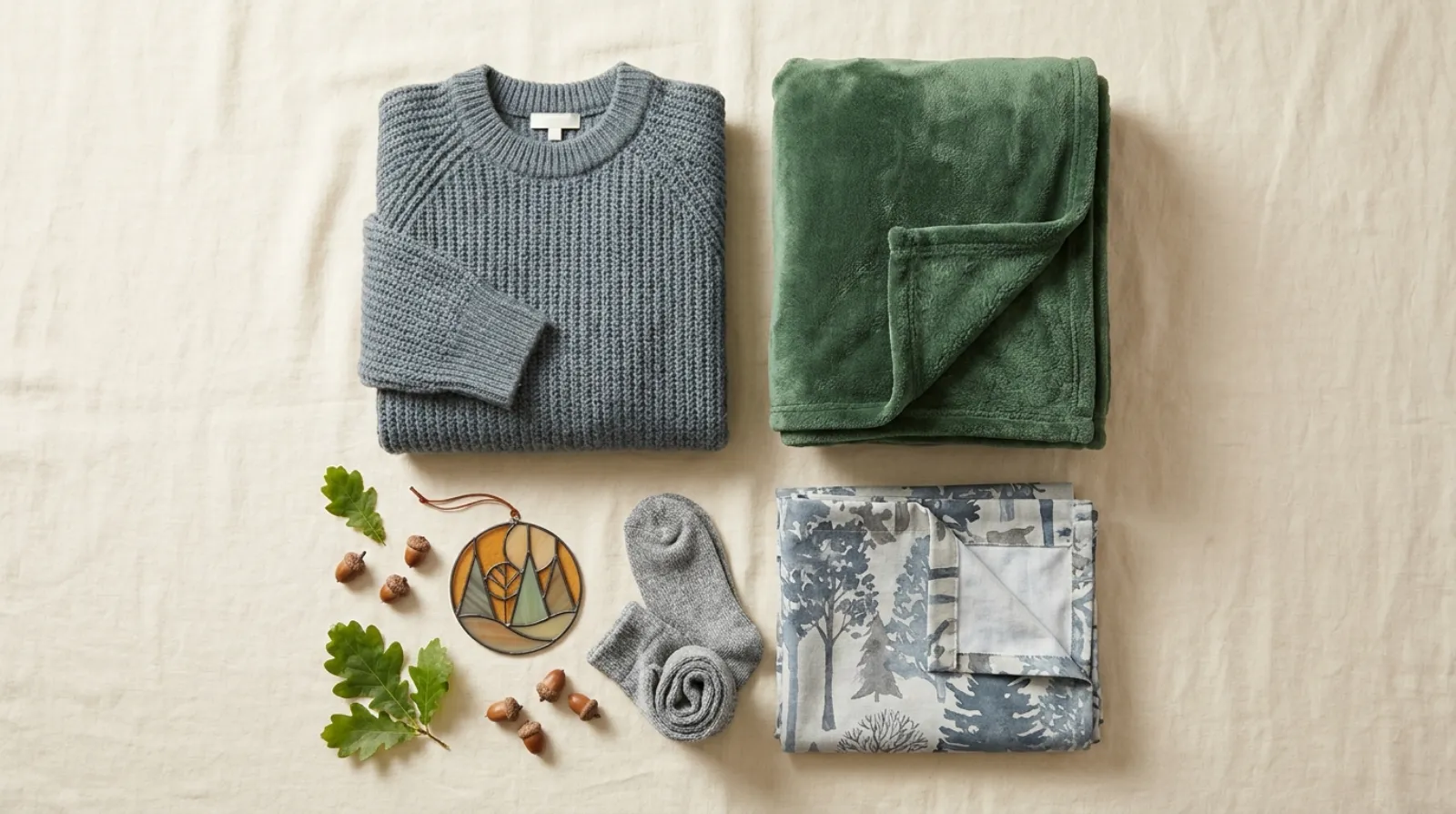
The piece that surprised me most is the Totoro rain Miyazaki holiday sweater (around $38), which references that bus-stop rain scene and wears genuinely well in winter. The Totoro plush throw blanket (around $39) is the one I reach for most, soft enough to actually use every night rather than just display. For the home, the Totoro Great Wave tapestry (around $25) turns a blank wall into something calming, and the matching Totoro Great Wave window curtain (around $50) finishes the look if you want to go all in on a room theme.
Two more round it out nicely. The Totoro stained glass ornament (around $18) is the small, joyful gift that catches light in a window, and the starry night shower curtain (around $50) is the wildcard for the fan who wants the forest spirit in every room of the house.

The moments that make his merch hit
Totoro gear lands emotionally because the film is built from a handful of unforgettable, quiet images, and the best designs reach for them on purpose. There is the bus stop in the rain, the umbrella, the cat bus grinning through the dark, the moment the girls plant acorns and Totoro makes them sprout into a towering tree overnight in a dream that may not be a dream. None of it is loud. All of it is warm. That is why his merch leans toward soft fabrics, muted woodland greens and greys, and home pieces rather than flashy apparel. The character is calm, so the gear is calm.
The Great Wave motif you see on the tapestry and curtain is a lovely bit of design, blending Totoro’s silhouette into a Hokusai-style wave, which nods to the deep Japanese art tradition Miyazaki draws from without ever being heavy-handed about it. It is the kind of crossover that works because both halves are about nature being bigger and older than us. When you hang that tapestry, you are getting a little piece of two Japanese icons at once, the forest spirit and the famous wave, folded into one calming image.
And then there is the simple fact that Totoro is generational. Parents who grew up with the film are now showing it to their own kids, which means the merch carries a double nostalgia, the adult remembering their childhood and the child discovering it for the first time. Very few characters in anime sit that comfortably across decades, and it is why a Totoro blanket or ornament makes such a resonant gift. You are not just giving a thing, you are passing down a feeling.
How to choose your Totoro piece
Different buyers, different picks. Here is how I steer the three people who usually land on a page like this.
If you are buying for yourself, the plush throw blanket is the daily driver, no question. It is the piece you will actually use, draped over a couch or a bed, and it brings that cozy forest-spirit calm into your space without you having to think about it. If you want your room to have a clear theme, the tapestry plus the curtain build a whole calming corner. The holiday sweater is the move if you want one wearable piece that is festive without being garish.
If you are buying for the friend who loves Studio Ghibli, Totoro is the safest bet in all of anime gifting, because nobody dislikes Totoro. The stained glass ornament is the perfect small, thoughtful gift that looks far more considered than its price, and the blanket is the upgrade if you want to genuinely surprise someone who already owns the movies on every format. A Ghibli fan will recognize the Great Wave tapestry instantly and appreciate the design depth.
If you are a parent shopping for a kid, Totoro is about as wholesome and age-appropriate as anime gets. There is no violence, no fan service, nothing to vet, just a gentle film about sisters and a forest spirit. The plush blanket is a beautiful gift for a young fan, soft and comforting at bedtime, and it doubles as the thing they will drag everywhere. The ornament is a sweet stocking-filler that introduces the character without overwhelming a small room. On the sweater, these run for a relaxed fit, so order true to size for kids and consider sizing up if you want a season or two of growing room.
Pairings, styling, and bringing the forest home
Totoro is less about outfits and more about atmosphere, so I style him at the room level rather than the head-to-toe level. The trick is to keep the palette soft, woodland greens, warm greys, natural wood tones, and let one Totoro piece anchor the space. The tapestry on the wall, the blanket on the bed, the ornament in the window, and suddenly a plain room feels like the edge of a quiet forest. He pairs beautifully with plants, with warm lamp light, with anything that leans natural and unhurried.
For the broader Ghibli world, the My Neighbor Totoro collection pulls in the wider range if you want to build out a themed corner or coordinate a gift set. And if you are decorating a shared family space, Totoro is the rare anime character that genuinely fits a living room without anyone raising an eyebrow, which is part of his quiet magic. The gear is designed to blend into a home rather than shout from it.
Materials, care, and making it last
Soft goods live or die on fabric, so this matters most with Totoro gear since so much of it is the cozy kind. A good plush blanket holds its loft and softness wash after wash, while a cheap one mats down fast, so the throw blanket is worth treating gently. Wash it cold on a delicate cycle and tumble dry on low or air dry, and it stays plush for years. The holiday sweater wants the same care, cold wash inside out, low heat, to protect the knit and the print.
The home pieces are even simpler. The tapestry and curtains just need an occasional cold gentle wash and a low or no-heat dry to keep them from shrinking and to protect the print. The shower curtain wipes down easily and the stained glass ornament needs nothing but a soft cloth and a safe spot. The nice thing about Totoro’s muted palette is that it ages gracefully, the soft greys and greens do not fade in the jarring way bright colors do, so well-kept pieces keep that calm, lived-in look that suits the character.
Totoro as a gift across the seasons
One thing I have learned giving anime merch over the years is that Totoro is the gift that works when nothing else does. He crosses age, gender, and even fandom lines, because plenty of people who have never sat down to watch a single episode of anime still recognize that round grey silhouette and feel warmly toward it. That makes him uniquely safe for the hard-to-shop-for person, the coworker doing a gift exchange, the in-law you do not know well, the kid whose interests you are not sure of. A Totoro blanket or ornament reads as thoughtful and gentle rather than niche, which is exactly what you want when you are not certain how deep someone’s anime knowledge runs.
The home pieces in particular shine as housewarming and holiday gifts. A new apartment with bare walls is the perfect home for the Great Wave tapestry, and the stained glass ornament is a lovely little addition to a first tree or a sunny windowsill. For a baby shower or a new parent, the plush blanket is soft, washable, and the kind of thing that becomes a child’s favorite comfort object for years. There is something fitting about that, since the film itself is so much about childhood, comfort, and the safety of home. You are giving an object that carries the same feeling the movie does.
And for the longtime Ghibli devotee, the move is the matched set. Pairing the tapestry with the curtain, or the blanket with the ornament, turns a single gift into a coordinated little corner of calm, and it signals that you put real thought into building something rather than grabbing one item off a shelf. The muted woodland palette means these pieces always look intentional together, never cluttered, which is part of why a Totoro gift set lands as elevated rather than just cute.
FAQ
What is the best Totoro merch to buy first? The Totoro plush throw blanket is the best starting point. It is the piece you will actually use every day, it captures the cozy spirit of the film, and it works as both personal comfort and a heartfelt gift.
Is Totoro merch a good gift? Yes, it is one of the safest gifts in all of anime. Almost everyone has a soft spot for Totoro, so the risk of getting it wrong is very low. The stained glass ornament and the plush blanket both make warm, thoughtful presents.
Is Totoro merch appropriate for kids? Absolutely. My Neighbor Totoro is one of the most wholesome, kid-friendly stories in anime, with no violence or mature content. The plush blanket and ornament are wonderful gifts for young fans.
What kind of Totoro merch is there besides clothing? Most Totoro gear is home and decor rather than apparel, which suits the gentle character. You will find plush blankets, wall tapestries, window and shower curtains, and ornaments alongside the occasional cozy sweater.
Closing
Totoro is the part of anime that asks nothing of you except to slow down and notice the rain. His gear is built to live in your home and quiet your space, and that makes it some of the most genuinely useful merch a fan can own. If he is your comfort character, bring the forest indoors. Browse the full Totoro collection and find the piece that makes your room feel a little more like that bus stop in the rain. Warau koto wo wasurenaide, do not forget to laugh.
